
The Problem with Pricing
And the 3 critical factors for success.

When people think about pricing their products or services, the first question they often ask is:
“How much should we charge?”
This seems like a logical place to start. But it’s like trying to create an advertising campaign by first asking, “What should the headline be?”
From there, the conversation often continues with:
What are our competitors charging?
What are our unit costs?
What pricing model should we use?
What’s the most we can charge without upsetting customers?
This is a very common approach. Most business leaders recognise it—and assume it’s the right way to set prices.
But it’s not. It’s a tactical approach, focused on short-term decisions and internal assumptions. And that means you’re likely leaving money on the table because your pricing isn’t optimised to support long-term growth and profitability.
Why Pricing Needs a Strategic Mindset
Very few people are taught how to do pricing properly (unless you took a pricing elective during an MBA—maybe).
Here’s what typically happens in a business:
CEO: “How much should we charge for our services?”
CFO: “We need to work out our unit costs and calculate the margins.”
CRO: “The prices need to be acceptable to our customers and easy to sell.”
CMO: “We need to ensure our prices reflect our product’s value and market positioning.”
Someone then builds a spreadsheet, and stakeholders gather around to agree on something that feels “about right.”
This pricing-by-committee approach has some serious flaws:
It uses limited inputs
It guesses at what customers will pay
It focuses on internal targets
It’s rushed and short-term
It rarely includes customer research or testing
It skips simulation or scenario modelling
The root of the problem? Pricing is seen as a tactic, not a strategy.
Why Pricing Is the Most Important Strategic Lever You Have
Pricing affects almost everything:
How customers perceive your value
How you’re positioned in the market
Your revenue and profits
Your cash flow and reinvestment capacity
Your growth trajectory
Your overall enterprise value
One study of 1,700 global firms found that 85% had poor or suboptimal pricing models—leaving millions in untapped revenue and profit on the table.
The Three Critical Success Factors for Pricing Excellence
Great pricing doesn’t start with the numbers. It starts with strategic clarity:
Who are your ideal customers?
What are you offering them?
Where do you sit in the market?
What are your business goals?
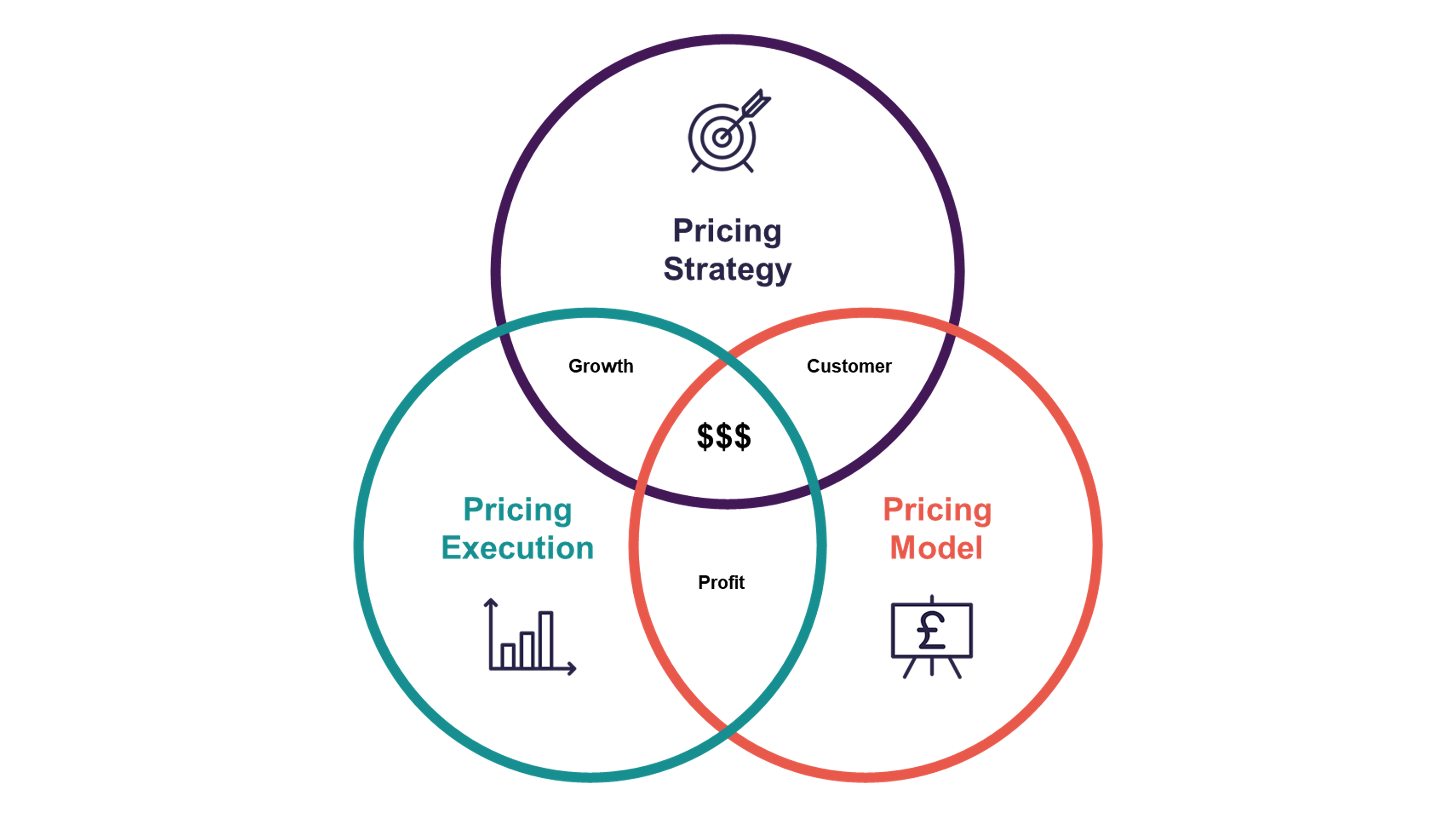
From there, you need to build your pricing system around three critical elements:
1. A Unique Pricing Strategy
This defines why you price the way you do and what you’re trying to achieve.
2. An Optimised Pricing Model
This outlines how you price—your structure, metrics, tiers, and price points.
3. Disciplined Pricing Execution
This ensures you execute your pricing plan effectively, with the right processes, tools, and governance.
Breaking It Down: The Components of Pricing Excellence
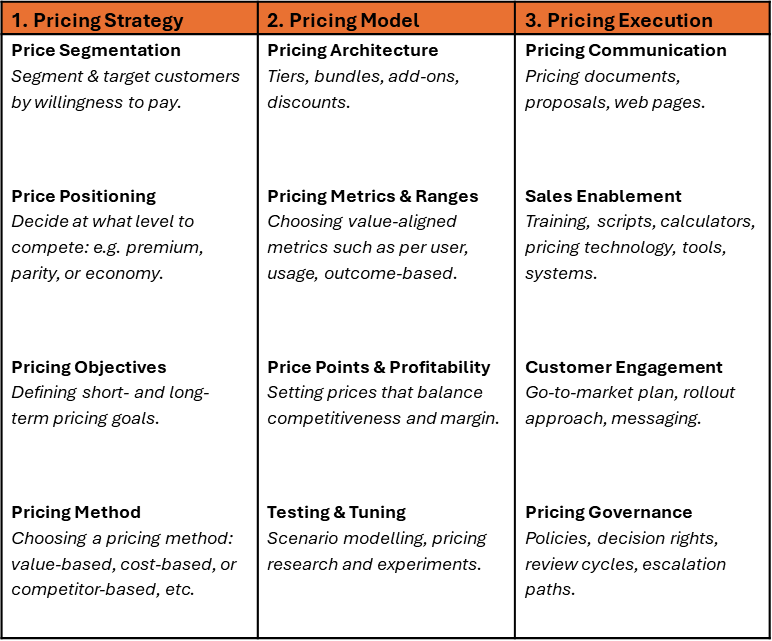
Each of the three core elements has four components. Here’s what that looks like:
Is It Worth the Effort? Absolutely.
This may seem like a lot of work just to answer a simple question: “How much should we charge?”
But the results speak for themselves.
A Bain & Co survey found that B2B firms that implemented intelligent pricing systems and repeatable sales playbooks achieved:
2.2x revenue growth (vs industry averages)
~ 2x margin growth (vs industry averages)
These are game-changing results. And they’re achievable—if you stop treating pricing as a tactical decision and start treating it as the strategic lever it truly is.
Clarity Builds Confidence
Imagine knowing, every time you speak to a prospect or client, that your pricing is:
Clear
Confident
Aligned to your value
Supported by your team
Driving the results you want
That’s the power of pricing done right.
It doesn’t just make selling easier—it builds a more profitable, scalable business. And your team will thank you for it.
Need Help? Let’s Talk.
If you’d like support building a pricing strategy that accelerates growth and boosts profitability, I’d love to help.
Kind regards
Mark Peacock
